Where Did ‘Maximum Pressure’ Go?
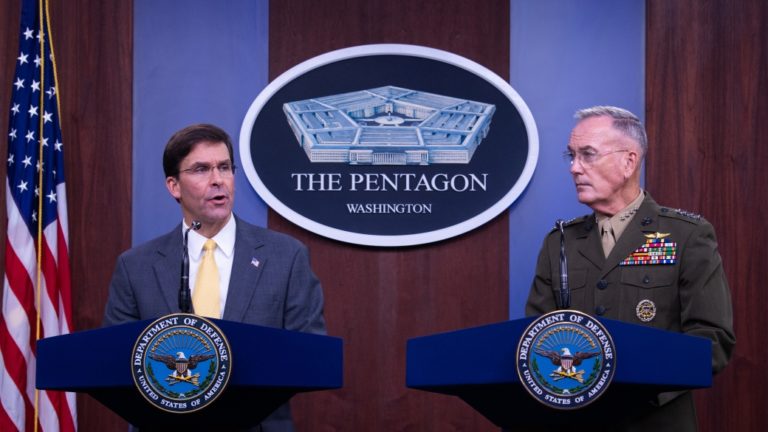
It’s now time for the Trump administration to reinvigorate its posture of “maximum pressure,” which has come to look more like one of maximum patience.

It’s now time for the Trump administration to reinvigorate its posture of “maximum pressure,” which has come to look more like one of maximum patience.

On Tuesday, Defense Secretary Mark T. Esper notified members of Congress that he would take $3.6 billion from military construction projects to build 175 more miles of wall along the U.S. border with Mexico.

New missile defense plans depend upon the success or failure of one thing: a new layer of space-based sensors.
On August 10, the Department of Defense kicked off a defense-wide zero-based review. This brief explains what the review entails, which defense-wide organizations are subject to it, and previous efforts at driving efficiencies in the “Fourth Estate.”

The Trump administration released a new presidential memorandum on August 20, 2019, that details its new policy on the “Launch of Spacecraft Containing Space Nuclear Systems.” From the title, some may assume this policy concerns the placement of nuclear weapons in space, which would violate the Outer Space Treaty, but in fact, it is a move to restructure how the U.S. government regulates and approves space-based nuclear power systems—particularly nuclear propulsion systems.

The Trump Administration’s new memorandum is a move to restructure how the U.S. government regulates and approves space-based nuclear power systems—particularly nuclear propulsion systems.

Geopolitical competition is increasingly playing out in the gray zone—the space beyond diplomacy and short of conventional war. The nature of this competition is forcing the United States to confront the liabilities of its strengths. This report assesses current U.S. government actions to deter, campaign through, and respond to competitors’ gray zone tactics.

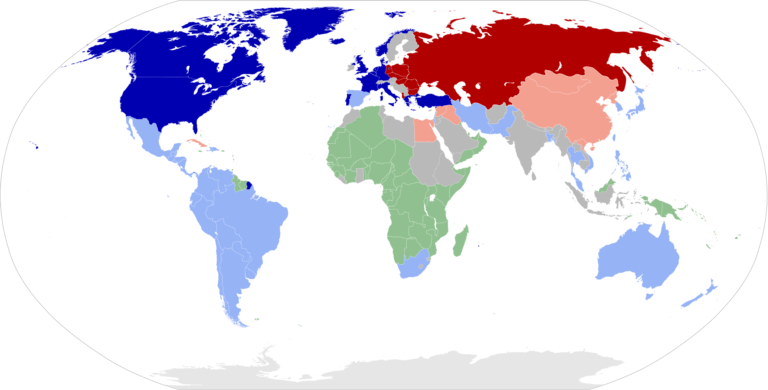
The Cold War has been called “a 45-yearlong Gray Zone struggle,” making an examination of how the U.S. government (USG) organized itself for competition during that era a critical case study.

This case study examines the organizational and structural decisions made by First Solar, Inc. between 2006–2012 and explains why First Solar continued to be viable in a volatile market.

The increasing importance of software has created an opportunity for the Department of Defense (DoD) to harness innovation through the acquisition and modification of adaptable systems.