Bad Idea: Disestablishing the Space Force
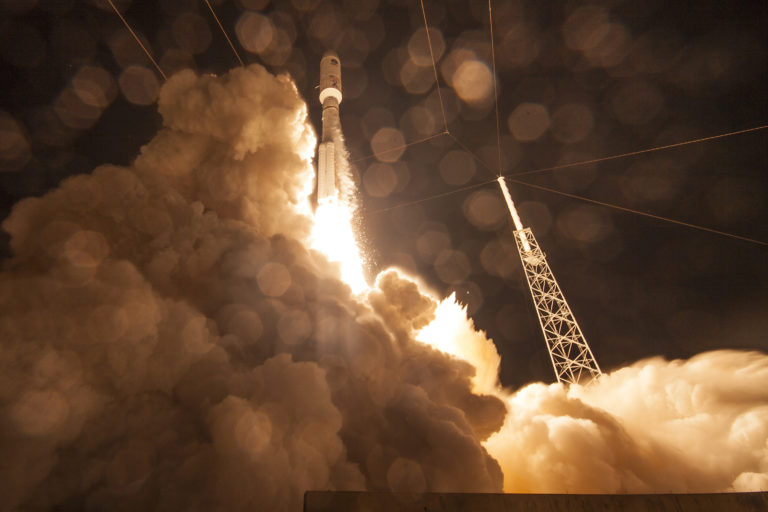
Despite criticism, the creation of the Space Force as an independent service was a timely, strategically-important decision. It would be a bad idea to roll it back into the Air Force.
Read the most recent CSIS research on U.S. national security strategy.
Despite criticism, the creation of the Space Force as an independent service was a timely, strategically-important decision. It would be a bad idea to roll it back into the Air Force.
Calls to revive the Cold War-era United States Information Agency (USIA) are rooted more in the lack of cohesive strategy for global public diplomacy than in any real suitability of the agency for the modern era. Instead, the government should deploy existing tools and resources to engage global publics and advance U.S. interests.
Since the launch of Sputnik during the Cold War, the United States has prioritized STEM education in an effort to grow and maintain a competitive edge — often at the expense of civic education. However, U.S. national security also depends on Americans’ understanding of and commitment to our democratic institutions.
Using “the Pentagon” or “the White House” as if they were actors in the political process risks misleading readers from what is going on.
The 2018 National Defense Strategy called out the “reemergence of long-term, strategic competition.” While this was a smart shift in focus, the widely used “great power competition” is the wrong term to describe this new priority.
In the nuclear realm, the challenge of civilian control is solved with presidential authority. Understanding and addressing the concessions that presidents might make to military expertise surfaces the precarious nature of civilian nuclear command and control.
Conventional hypersonic strike weapons may undermine deterrence by complicating early-warning and increasing the vulnerability of forward-based forces to surprise attack below the nuclear threshold. Nevertheless, history shows that adaptation to strategically disruptive technologies is possible.
How would new norms for testing space weapons affect nuclear stability and traditional deterrence? Would a direct-ascent ASAT limit or ban create stability or further destabilize the space and nuclear domains?
Today, traditional nuclear missions increasingly intersect with emerging technical domains such as space and cyber. How can policymakers mitigate the risks that bureaucratic competition can pose to the shared mission of defending the nuclear command, control, and communications (NC3) system?
What would detailed conventional nuclear integration in doctrine, concepts, and large-scale exercises look like? Joint concepts inform high-level military doctrine, which in turn provides guidance on what the military should aim to achieve through planning and training in large-scale exercises.